
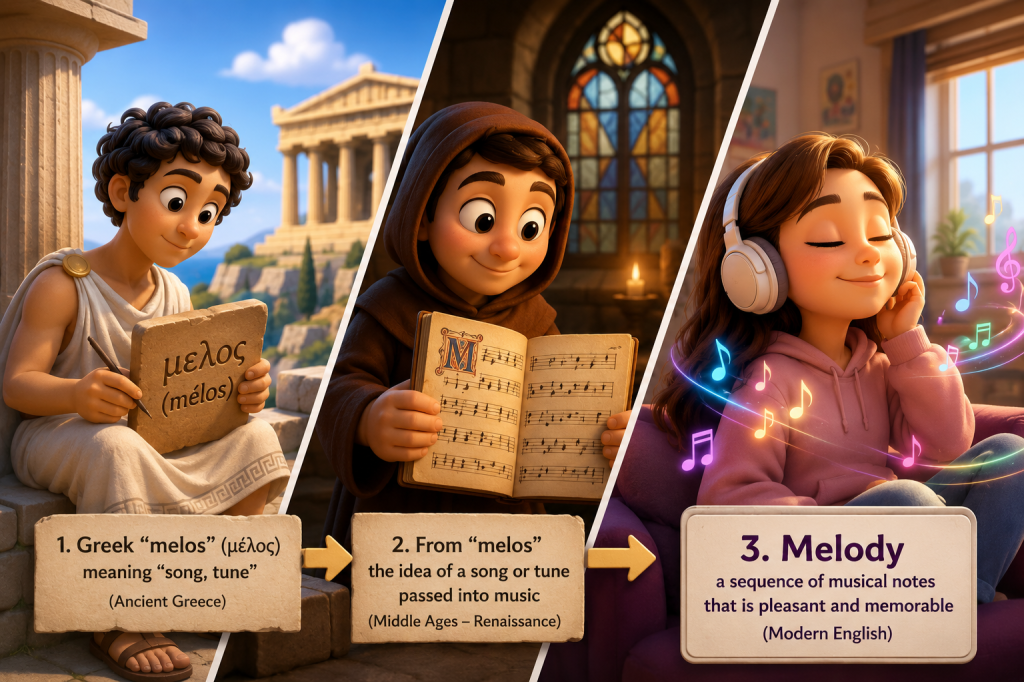
The word “melody” refers to a sequence of musical notes that are perceived as a single, coherent line. It is one of the most recognizable elements of music, often what listeners remember most. The term carries both artistic and linguistic history rooted in ancient cultures.
1. Ancient Greek Origins
“Melody” originates from the Ancient Greek word melōidía, which combines melos (song or tune) and aeidein (to sing). This reflects its original meaning as something that is sung rather than merely played. In ancient Greece, melody was closely tied to poetry and performance, not just instrumental sound.
2. Transmission Through Latin and French
The Greek melōidía passed into Late Latin as melodia, preserving its musical meaning. It later entered Old French as melodie, where it became associated more specifically with pleasant or tuneful sequences. This transition helped shape the modern sense of melody as something aesthetically pleasing and structured.
3, Modern Meaning and Usage
In modern English, “melody” refers to the main musical theme or tune in a composition. It is distinct from harmony and rhythm, serving as the central thread that listeners follow. The word now applies broadly, from classical compositions to popular songs, retaining its core idea of a singable musical line.
“Melody” has traveled from ancient Greek song traditions to modern global music vocabulary. Its roots emphasize singing and lyrical expression, which still define its essence today. The word’s evolution mirrors the enduring human desire to organize sound into meaningful and memorable patterns.


Leave a Reply