
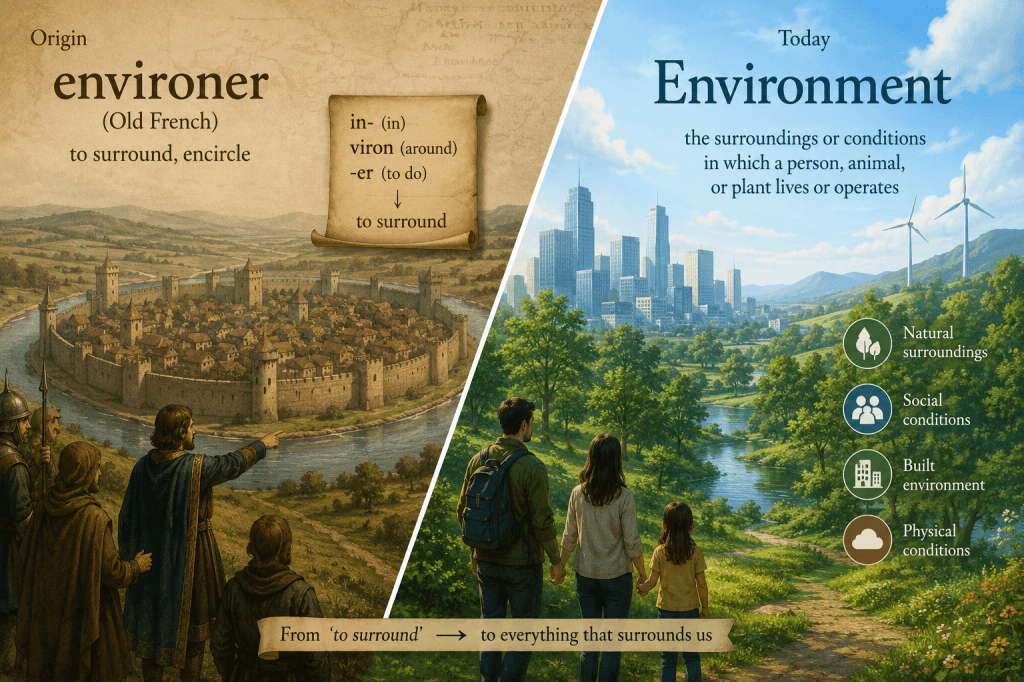
The word environment is so common today that it seems timeless, yet it originally referred to the idea of being physically surrounded by something. Over time, its meaning expanded from a simple description of surroundings to a broad concept covering nature, society, and living conditions. The history of the word reflects humanity’s growing awareness of the world that shapes life.
1. A French Origin
The word environment comes from the Old French verb environner, meaning “to surround” or “to encircle.” This verb was formed from environ, meaning “around” or “in the vicinity.” When the word entered English during the medieval period, it carried the basic idea of things existing around a person or object.
2. From Surroundings to Conditions
For centuries, environment simply referred to the physical surroundings of a place or person. During the 19th century, scientists and philosophers began using the word to describe the external conditions that influence living organisms. This shift transformed the word from a geographical description into a concept explaining how life is shaped by its surroundings.
3. The Rise of the Modern Meaning
In the 20th century, environmental science and conservation movements greatly expanded the importance of the word. Environment came to include ecosystems, climate, natural resources, and the relationship between humans and nature. Today, the term is central to discussions about sustainability, pollution, and the future of the planet.
The word environment began as a simple idea meaning “that which surrounds.” From its French roots describing physical surroundings, it evolved into one of the most significant concepts in modern science and public policy. Its history reminds us that every living thing exists within a larger world that continuously influences and shapes it.
 Intellesia
Leave a comment