
Introduction
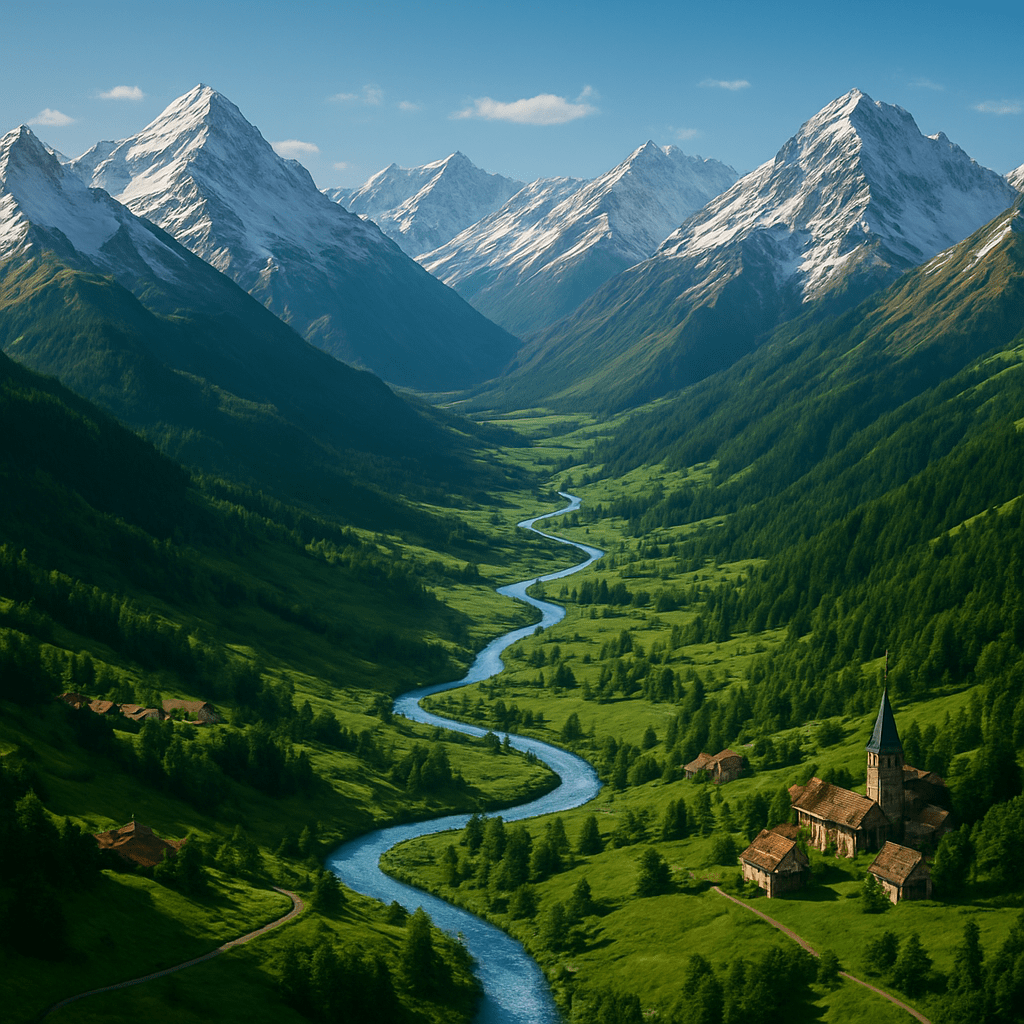
The Alps are Europe’s most prominent mountain range, stretching approximately 1,200 kilometers across several countries, including France, Switzerland, Italy, Austria, Germany, and others. More than a dramatic natural landscape, the Alps have profoundly shaped European civilization for thousands of years. They influenced migration, warfare, trade, political boundaries, economic development, and cultural identity across the continent. The history of Europe cannot be fully understood without understanding the role of the Alps.
Geological and Natural Background
The Alps were formed roughly 30-65 million years ago when the African tectonic plate collided with the Eurasian plate. This immense geological process uplifted marine sediments and created some of Europe’s highest peaks, including Mont Blanc. The Alps serve as a major watershed for Europe. Several important rivers originate in or near the mountains, including the Rhine River, Rhône River, Po River, and Danube River. These rivers carried Alpine influence far beyond the mountains themselves.
Environmental Influence
A Climatic Barrier
The Alps function as a massive wall across central Europe. Moist air from the Atlantic Ocean is forced upward when it encounters the mountains, producing heavy rainfall on some slopes and creating drier conditions on others. This process influences regional climates across much of Europe. The mountains also create sharp environmental differences between northern and southern Europe.
Water Supply
Snow and glaciers act as natural reservoirs. During spring and summer, melting snow feeds rivers that support agriculture, transportation, industry, and urban populations across Europe. For centuries, Alpine water has sustained millions of people living far from the mountains themselves.
Natural Obstacles to Movement
Before modern engineering, crossing the Alps was difficult and dangerous. Steep terrain, avalanches, harsh winters, and narrow passes limited travel. As a result, movement across Europe became concentrated through a small number of strategic routes. The geographical constraint would have enormous historical consequences.
Influence on Human Civilization
A Barrier that Shaped Settlement
The Alps separated different regions of Europe and influenced where people settled. Communities often developed in isolated valleys, creating distinct languages, customs, and local identities. Many Alpine regions preserved unique cultural traditions because geographic isolation reduced outside influence. The mountains helped create Europe’s remarkable cultural diversity.
The Gateway Passes
Although the Alps were a barrier, they were not impassable. Several passes became vital corridors connecting northern and southern Europe, including the Great St.Bernard Pass and the Brenner Pass. Control of these routes brought economic and political power. Merchants, pilgrims, armies, and migrants all depended on them.
Military Influence
The Alps have played a major role in European warfare. One of the most famous examples occurred during the Second Punic War when Hannibal crossed the Alps with his army and elephants to invade the Roman Republic. The crossing shocked Rome because the mountains were considered a natural defensive barrier. For centuries afterward, rulers viewed Alpine passes as critical strategic assets.
Economic, Political, and Cultural Impact
Trade Networks
The Alps sat between the prosperous economies of northern Europe and the Mediterranean world. Merchants transporting goods such as salt, wine, textiles, metals, and spices often had to pass through Alpine routes. Towns controlling these routes became wealthy trading centers. Geography transformed mountain passes into economic chokepoints.
The Rise of Switzerland
The mountainous terrain played a major role in the development of Switzerland. The difficult landscape made external conquest challenging while encouraging local cooperation among Alpine communities. Over time, this helped foster Switzerland’s tradition of local autonomy, federalism, and neutrality. In this sense, geography influenced political culture as much as military strategy.
Cultural Boundaries and Exchange
The Alps simultaneously divided and connected Europe. They separated linguistic and political regions, yet the mountain passes facilitated cultural exchange between northern and southern Europe. Ideas, technologies, religions, and artistic styles moved through Alpine corridors for centuries. The mountains acted both as walls and bridges.
Modern Significance
Transportation Infrastructure
Modern engineering has dramatically reduced the Alps’ barrier effect. Projects such as the Gotthard Base Tunnel allow rapid movement of goods and passengers beneath the mountains. The Alps remain one of Europe’s most important transportation corridors.
Tourism
Today, the Alps are one of the world’s leading tourism destinations. Millions visit annually for skiing, hiking, mountaineering, and scenic rail travel. Tourism has become a major economic driver for Alpine communities.
Climate Change
Many Alpine glaciers are shrinking due to rising temperatures. This affects water resources, hydropower generation, ecosystems, and tourism industries. The future of the Alps has become an important environmental issue for Europe.
Conclusion
The Alps are far more than a mountain range. Their towering peaks shaped Europe’s climate, controlled movement across the continent, directed trade routes, influenced military campaigns, encouraged cultural diversity, and contributed to the development of states such as Switzerland.
For more than two thousand years, the Alps have helped determine how Europeans traveled, traded, fought, governed, and lived. They remain one of the clearest examples of how physical geography can shape the course of human civilization.


Leave a Reply