
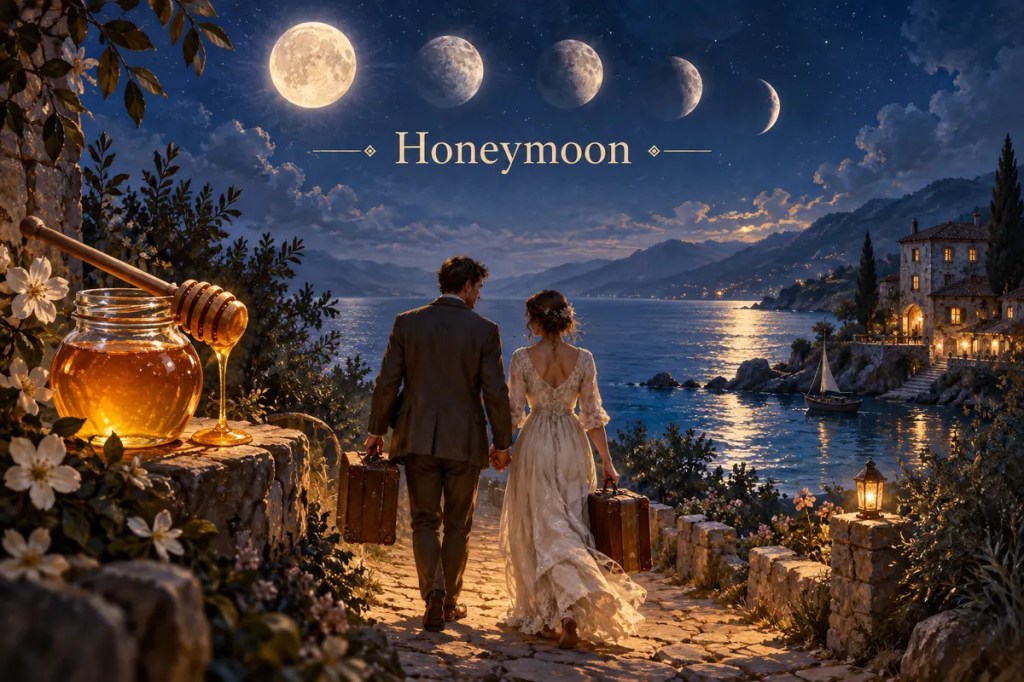
Today, a honeymoon is usually imagined as a journey taken just after a wedding: a private interval of celebration before ordinary life resumes. The word sounds entirely romantic, joining the sweetness of honey with the light of the moon. Its earliest history, however, contained a more cautious idea. The sweetness of new marriage was real—but, like the moon, it might not remain full forever.
1. Honey and Moon
Honeymoon is a compound of two old English words. Honey had long represented sweetness and affection, while moon could refer not only to the heavenly body but also to a measured period associated with its cycle. Moon and month ultimately belong to the same ancient family of words connected with measuring time.
The expression appears in sixteenth-century English as hony moone. The earliest known example is found in a 1546 work by the English writer John Heywood. It describes the happy beginning of a marriage but immediately contrasts that delight with the possibility that the couple’s affection may change.
A popular story claims that the word came from a custom in which newlyweds drank honey wine, or mead, for one lunar month. Honey drinks and wedding customs certainly existed, but historical linguists have not found convincing evidence that this practice produced the English word. The recorded history instead points directly to the familiar images of honey-like sweetness and the moon’s changing phases.
2. Sweetness Expected to Wane
Early explanations of honeymoon were less sentimental than the modern word. A sixteenth-century dictionary described the intense love of newly married people as something likely to diminish. The moon provided a natural comparison: once it is full, it begins to wane.
The compound therefore balanced pleasure with impermanence. Honey named the sweetness of the beginning, while moon suggested change and limited duration. The word did not originally require a trip, a resort, or even exactly one calendar month. It named the first tender period after marriage and hinted that ordinary disagreements might follow.
This slightly ironic quality also allowed the word to move beyond marriage very early. By the late sixteenth century, writers could use honeymoon figuratively for a brief period of harmony between political powers. The image worked because early goodwill, like newly married affection, might later be tested.
3. From Wedded Period to Wedding Journey
The association with travel developed much later. By around 1800, honeymoon could refer specifically to the post-wedding holiday, and the verb to honeymoon appeared in the early nineteenth century. Changes in transportation, tourism, and middle-class wedding customs helped turn an emotional period into a journey with a recognizable place on the calendar.
In modern English, the noun most commonly means a vacation taken by newly married partners. The word also remains useful as a metaphor. A new government may enjoy a honeymoon period with voters, a new employee with colleagues, or a product with customers. In each case, the phrase describes an initial phase of unusually generous feeling before closer judgment begins.
The earlier warning has not disappeared; it has simply become quieter. Modern usage emphasizes celebration, yet the common phrase the honeymoon is over revives the old contrast between the sweetness of beginnings and the demands that arrive afterward.
Honeymoon began as an image of affection at its sweetest and time already in motion. From a changing moon to a wedding journey and a metaphor for early goodwill, the word preserves both the delight of a beginning and the knowledge that beginnings do not last unchanged.


Leave a comment